Deepavali Kitchen Guide: 8 Nov Early Prep
The big idea
Cook the slow food before Sunday. On Sunday we only cook rice, heat food, cook prawns and pack.
On Sun 8 Nov we feed about 4,500 guests. That is too much food to cook from the start in one day. So we split the work over the week, like studying a little every day before a big exam.
The danger: when we cook early, food can spoil if it stays warm too long. Germs grow fast in warm food. This guide shows how to keep food either very hot or very cold, so it stays safe.
| Food | When we make it | Is it finished on Sunday? |
|---|---|---|
| Masala bases and dal | Mon 2 to Wed 4 Nov, then freeze | Used in cooking on Fri, Sat and Sun |
| Mutton mysore | Half on Fri 6, half on Sat 7, then blast chill | Heat it to 75°C |
| Chicken sambal | Sat 7, then blast chill | Heat it to 75°C |
| Achar | Put in containers on Thu 5 | Ready. Just pack it |
| Prawns | Clean and tray on Sat 7. Do not cook | Cook 20 minutes before packing |
| Biryani rice | Never early | Cook fresh in batches |
The chef has the final word on every dish. If the test shows a dish tastes bad after chilling, that dish goes back to Sunday cooking.
The 7 golden rules
Follow these 7 rules every time. If you are not sure, stop and ask the chef. Never guess.
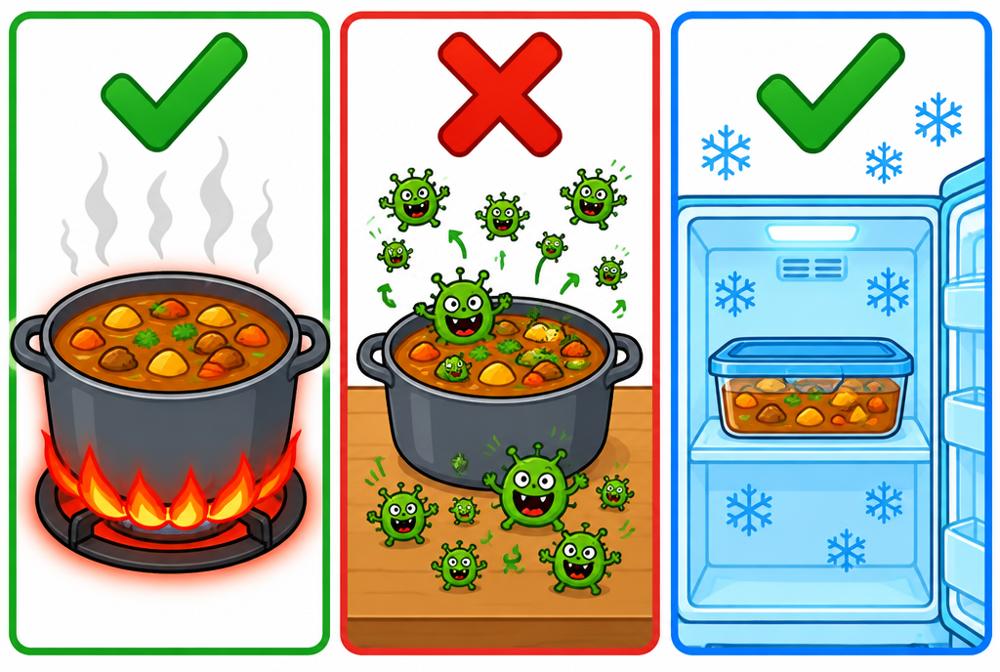
Rule 1: Food is very hot or very cold. Never warm.
Germs grow fast between 5°C and 60°C. We call this the danger zone. Hot food stays at 63°C or more. Cold food stays between 0°C and 3°C.
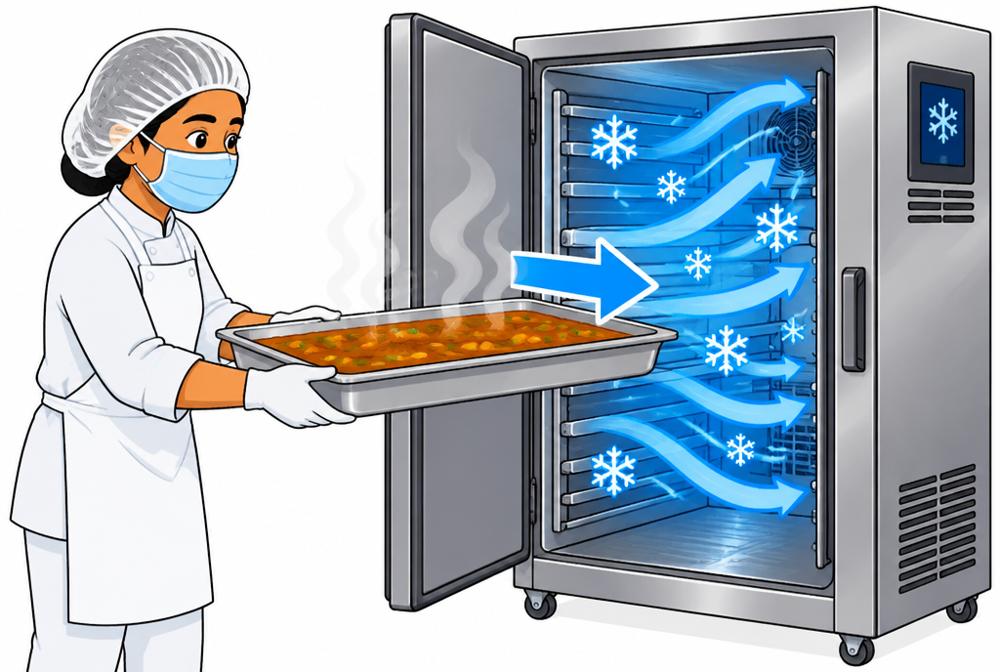
Rule 2: Hot food goes into the blast chiller at once.
Food must go from hot to below 3°C in 90 minutes. Never put hot food straight into the normal chiller. It warms all the other food.
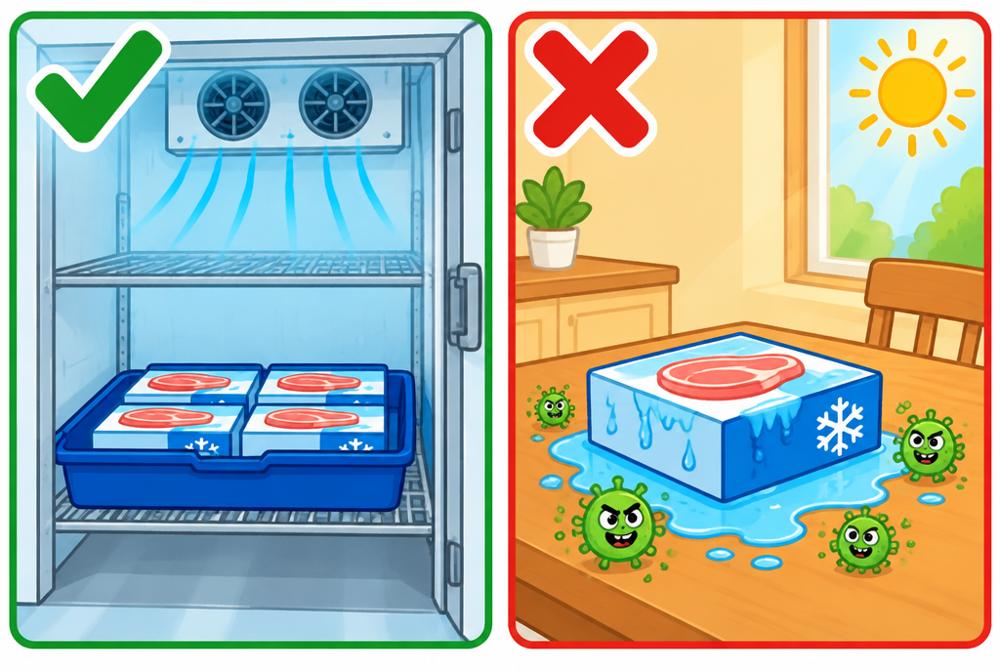
Rule 3: Thaw in the chiller only.
Frozen meat never sits out on a table or in water. It thaws slowly on the bottom shelf, on a tray, so juice cannot drip on other food.
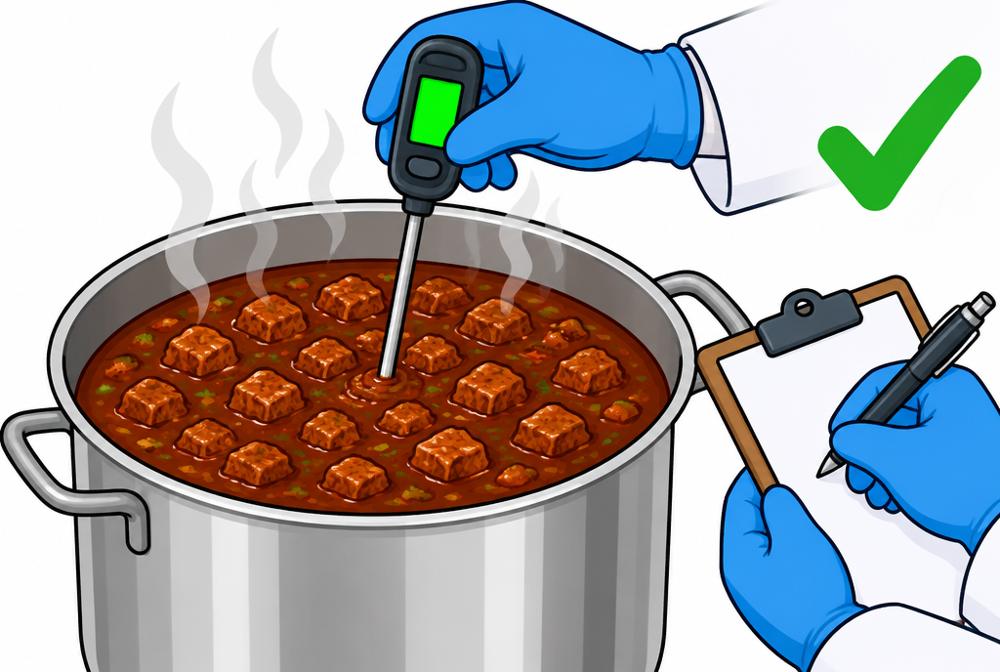
Rule 4: The thermometer decides. Your eyes do not.
Push the probe into the middle of the food. Write the number and your name on the sheet. No number written means it did not happen.
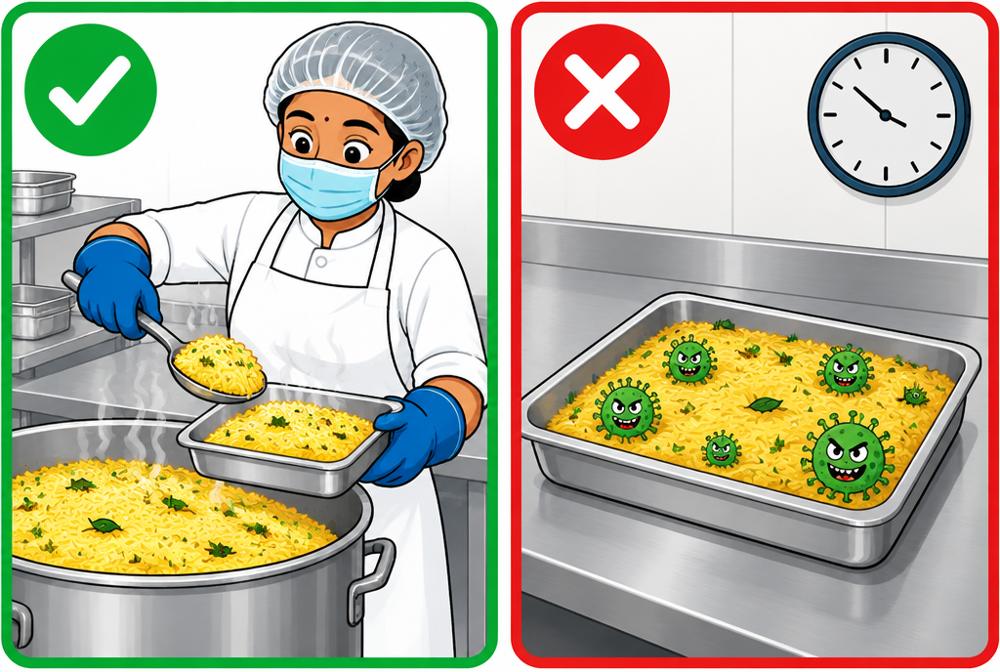
Rule 5: Rice is always fresh.
Cooked rice is the biggest danger in catering. It is never cooked early for 8 Nov.
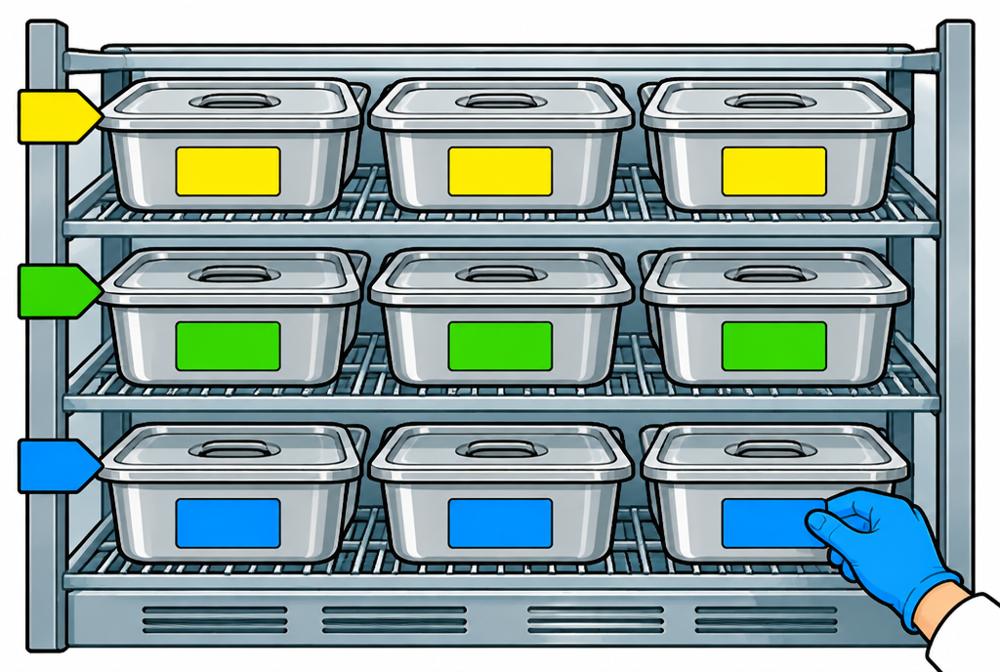
Rule 6: Every tray has a label.
The label says what it is, the date, the time, and which window it is for. No label means throw it away.
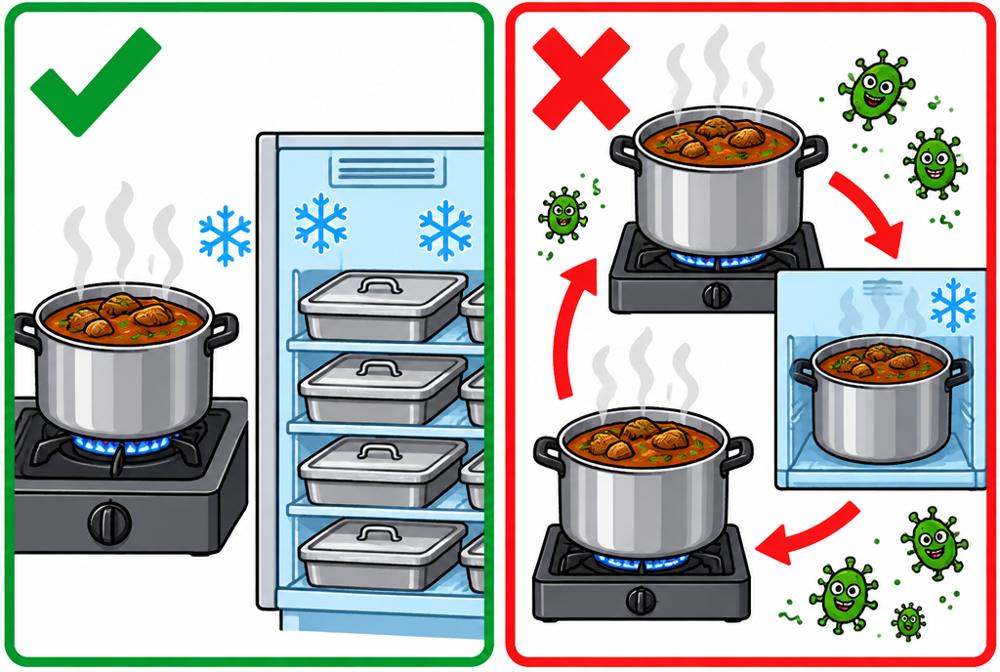
Rule 7: Heat food one time only.
Heat only what the next packing window needs. Food that was heated is never chilled and heated again. Food that was thawed is never frozen again.
| Number to remember | What it means |
|---|---|
| 75°C | Middle of the food when heating |
| 63°C | Lowest temperature for hot food waiting to be packed |
| 0–3°C | Chiller |
| 90 minutes | Longest time to get hot food below 3°C |
| −18°C | Freezer |
| 4 hours | Consume-by time, counted from packing |
Day by day
Tick each job when it is really done. Each job has one owner. Amounts are for 4,500 guests plus 10% extra. Jina updates them on Mon 2 Nov when the final count is ready.
Sat 31 Oct and Sun 1 Nov: test
- Palani: cook a small test of chicken sambal and kesari. Blast chill. Next day heat and taste
- Palani: heat a chilled test of mutton to 75°C. Time how long it takes
- Mohammad: use the 1 Nov buffets to practise labels and consume-by times
- Palani: give Vin the 4 machine numbers (last section)
Mon 2 Nov: count and start
- Jina: final guest count by 10am. Update every amount in this guide
- Anand: confirm delivery dates, and ask for tomatoes today instead of Thu
- Mohammad: count free space in chiller and freezer. Clear old stock
- Palani: start the masala bases
- Jina: mutton first delivery checked. Freezer below −18°C
Tue 3 Nov: bases
- Palani: make mysore masala, sambal base and biryani masala
- Chef Sakthi: cool in the blast freezer in flat bags, one bag for one batch
- Chef Sakthi: label every bag
Wed 4 Nov: bases finish, first thaw
- Palani: cook the dal, without vegetables. Blast freeze
- Jina: weigh rice, spices and kesari dry mix into batch bags
- Jina: chicken, prawns and the last packaging delivered and counted
- Mohammad: 322 kg mutton (half) moved to the chiller at night to thaw
Thu 5 Nov: second thaw
- Chef Sakthi: move the other 322 kg of mutton to the chiller at night
- Chef Sakthi: move 644 kg of chicken to the chiller at night
- Jina: portion achar into containers, lids on, in the chiller
- Palani: move frozen bases for Friday into the chiller
Fri 6 Nov: first big cook
- Palani: cook half the mutton mysore (322 kg raw). No potato
- Chef Sakthi: blast chill every batch. Write the temperature
- Aysah: split chilled food into lots by window (see below)
- Chef Sakthi: move prawns to the chiller at night to thaw
- Jina: print labels and run sheets
Sat 7 Nov: second big cook
- Palani: cook the other half of the mutton
- Palani: cook the chicken sambal (644 kg raw)
- Chef Sakthi: blast chill every batch. Write the temperature
- Yan: clean prawns on a cold table in small amounts. Tray 400–500 pieces. Back to the chiller at once
- Helpers: cut dalcha vegetables. Keep covered in the chiller
- Aysah: split chilled food into lots by window
- Pack Leads: set out labelled empty containers by window
- Mohammad: walk the kitchen at 10pm with the final check (Vin's checks below)
Sun 8 Nov: rice, heat, prawns, pack
- 03:00 Mohammad: kitchen opens. Check chiller temperature first
- 05:00 Palani: first rice batch. Then a new batch every 30–45 minutes
- Chef Sakthi: heat each lot to 75°C, only for the next window
- Combi team: cook prawns 20 minutes before packing
- Aysah: check warmers every hour. Below 63°C means stop and call the chef
- Yan: every pot back at the stove within 15 minutes
- Pack Leads: write packed time + 4 hours on every bag
How to do each job
Each job has simple steps. Do them in order and skip nothing.
Job 1: Thaw meat
- Check the chiller is 0–3°C.
- Put the box on a deep tray on the bottom shelf.
- Label the tray: what it is, date, time.
- Leave space around boxes so cold air can move.
- Next day, press the middle of the meat. No hard ice means it is ready.
- Still hard? Tell the chef. Never use hot water.
Job 2: Cook and chill (mutton, chicken)
- Cook until the middle reaches 75°C. Write it down.
- Pour into shallow trays right away. Keep the food thin. The chef sets the depth after the test.
- Put trays in the blast chiller right away. Write the start time.
- Do not stack trays on top of each other.
- After 90 minutes, probe the middle. It must be below 3°C.
- Cover, label, and move to the chiller.
Job 3: Split into lots
A lot is the amount of food for one packing window. Each window gets its own tray, with a colour tag.
- Work in a cold area, fast, in small amounts.
- Follow the lot sheet from Jina. It says how many guests each lot feeds.
- Label each tray with the window time.
- Put each window on its own shelf.
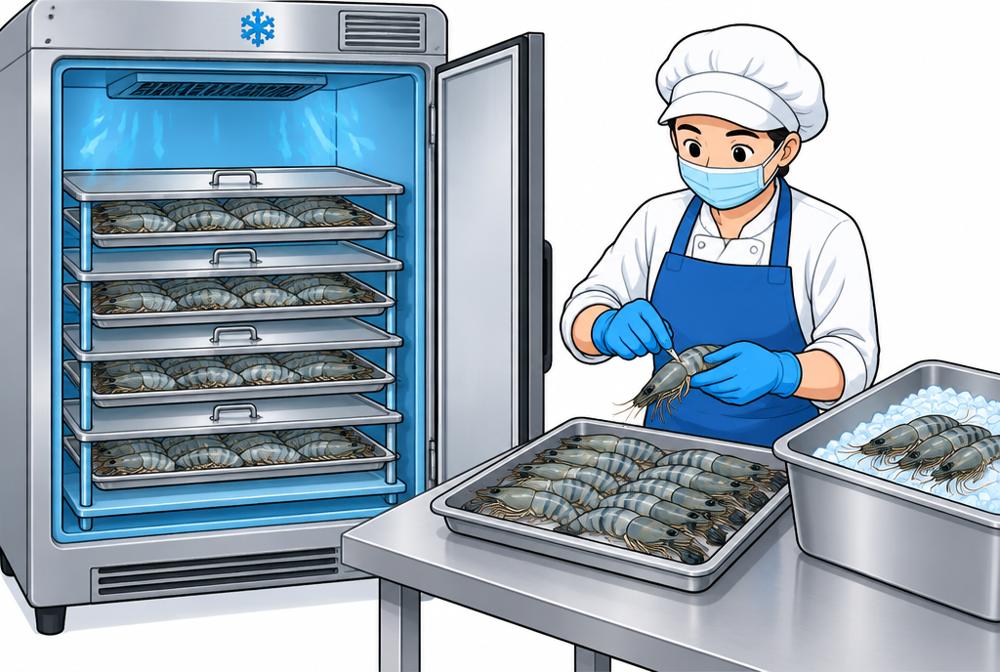
Job 4: Clean prawns
- Take out one tray at a time. The rest stays in the chiller.
- Clean on a cold, clean table, with gloves on.
- Lay 400–500 prawns in one flat layer.
- Cover, label, and put back in the chiller.
- Do not cook them yet.
Job 5: Heat on Sunday
- Look at the window sheet. Take out only the next lot.
- Heat until the middle reaches 75°C. Probe 2 places.
- Write the temperature, time and your name.
- Move straight to the warmer. The warmer keeps food hot. It cannot heat cold food.
- Leftover heated food is never chilled again.
Job 6: Hold hot and pack
- Check warmers every hour. They must be 63°C or more.
- Fill containers no more than 60 minutes before collection, or 30 minutes before the van leaves.
- Weigh the first container of each dish in each batch.
- Write packed time + 4 hours on the bag.
- Two people check every bag: one reads the label aloud, the other ticks the sheet.
If something goes wrong
Stop, tell the chef, and write it down. A problem told early is small. A problem hidden can make guests sick. Nobody gets scolded for reporting a problem.
| What happened | What you do | Who decides |
|---|---|---|
| Food not below 3°C after 90 minutes | Keep chilling. Tell the chef now. Do not move it to the chiller | Palani. Food not clearly safe is thrown away |
| Tray has no label | Do not guess. Set it aside | Throw it away |
| Chiller above 3°C | Close the door. Check again in 15 minutes. Still high? Call Mohammad | Mohammad moves the food |
| Power cut | Keep chiller and freezer doors closed. Call Mohammad and Vin | Mohammad |
| Heated food will not reach 75°C | Keep heating. Use a smaller batch | Palani |
| Warmer below 63°C | Stop packing from it. Tell Aysah | Aysah and Palani |
| Meat still frozen on cooking day | Do not use hot water. Tell the chef | Palani changes the order of cooking |
| Food smells, looks slimy or tastes wrong | Do not taste more. Set it aside | Throw it away |
| Pack is past its consume-by time | Do not change the time | Throw it away. Pack fresh |
| Food dropped on the floor | Throw it away | No one needs to ask |
| Someone is sick: vomit, runny stomach, fever | Do not touch food. Tell Mohammad | Goes home |
When in doubt, throw it out. Losing one tray is cheap. Making guests sick costs far more than a tray.
One reserve batch of rice and mutton (about 100 guests) is ready at 11:30 and 17:00.
Vin's checks
Vin checks 6 times. At each check, see it with your own eyes. Do not accept "OK boss". If a check fails, fix it before moving on.
No plan can promise zero problems. These checks catch problems early, while there is still time to fix them.
| When | Walk to | What must be true | If not |
|---|---|---|---|
| Mon 2 Nov, 11am | Chiller and freezer | 4 machine numbers given. Space cleared. Final count ready | Book a refrigerated truck today. Move more cooking to Thu |
| Wed 4 Nov, 6pm | Stores | Bases frozen and labelled. Batch bags done. All meat and prawns in. Mutton half moved to thaw | Call the supplier. Palani resets the cook order tonight |
| Thu 5 Nov, 9pm | Chiller | Meat on bottom shelves, on trays. Chiller still 0–3°C with the full load | Open a second thaw wave. Use the truck |
| Fri 6 Nov, 9pm | Temperature sheets | Every mutton batch has a number below 3°C. Taste one reheated tray | Add a cook shift on Sat morning. Throw away any failed batch |
| Sat 7 Nov, 10pm | Whole kitchen | Mutton and chicken lots on shelves by window. Prawns trayed. Rice bags and masala bags counted against the sheet. Containers set out | Keep the team until it is true. Mohammad signs |
| Sun 8 Nov, 3am | Chiller, then line | Chiller 0–3°C overnight. Probes and warmers working. Every station staffed | Mohammad starts backup stations. Call Vin |
What to ask at each check
- Show me the sheet. Is every number written?
- Pick any tray. What is it, when was it made, which window is it for?
- Probe one tray yourself. Does it match the sheet?
- Who owns the next job? Do they know the time?
- What is the one thing most likely to go wrong tomorrow?
Things to buy or set up now
- 6 probe thermometers, tested in ice water and boiling water
- Clipboards and temperature sheets at every station
- Colour tags, one colour for each window
- One refrigerated truck on standby for 6 to 8 Nov. Check the loading bay first
What we still need
This plan is not final until Palani gives these 4 numbers. They decide how much we can cook on each day.
| Number | Why it matters | Palani's answer |
|---|---|---|
| Blast chiller: kg in one cycle | About 1.5 tonnes of cooked mutton and chicken must chill (estimate). Over 2 days that is about 95 kg a cycle | |
| Chiller: how many trays fit | Thawing meat and cooked food share the space Thu to Sun | |
| Combi: how many trays | Sets prawn and reheat speed | |
| Pots: how many, and kg of raw rice in each | We need up to 190 kg of raw rice an hour at the peak |
Still to decide
- Palani: does chicken sambal taste right after chilling? Yes or no, after the test
- Palani: can kesari move to Saturday? Yes or no, after the test
- Vin: who has the final say on food safety? Confirm the 4-hour time with them, counted from when food is ready
தீபாவளி சமையலறை வழிகாட்டி: 8 நவம்பர் முன் தயாரிப்பு
இது ஆங்கில வழிகாட்டியின் தமிழ் நகல். ஏதாவது வேறுபட்டால், ஆங்கிலப் பக்கத்தைப் பின்பற்றி செஃப்பிடம் கேளுங்கள்.
முக்கிய யோசனை
மெதுவாக சமைக்கும் உணவை ஞாயிறுக்கு முன்பே சமைக்கிறோம். ஞாயிறு அன்று சோறு சமைப்பது, உணவை சூடாக்குவது, இறால் சமைப்பது, பேக் செய்வது மட்டுமே.
ஞாயிறு 8 நவம்பர் அன்று சுமார் 4,500 விருந்தினர்களுக்கு உணவு தருகிறோம். இவ்வளவு உணவை ஒரே நாளில் ஆரம்பத்திலிருந்து சமைக்க முடியாது. அதனால் வேலையை வாரம் முழுவதும் பிரிக்கிறோம். பெரிய தேர்வுக்கு முன் தினமும் கொஞ்சம் படிப்பது போல.
ஆபத்து: முன்கூட்டியே சமைத்த உணவு வெதுவெதுப்பாக நீண்ட நேரம் இருந்தால் கெட்டுப்போகும். வெதுவெதுப்பான உணவில் கிருமிகள் வேகமாக வளரும். உணவை மிகவும் சூடாகவோ மிகவும் குளிராகவோ வைத்து பாதுகாப்பாக வைப்பது எப்படி என்று இந்த வழிகாட்டி காட்டுகிறது.
| உணவு | எப்போது செய்கிறோம் | ஞாயிறு என்ன நிலை? |
|---|---|---|
| மசாலா பேஸ் மற்றும் தால் | திங்கள் 2 முதல் புதன் 4 நவம்பர், பிறகு உறைய வைக்கவும் | வெள்ளி, சனி, ஞாயிறு சமையலில் பயன்படும் |
| Mutton mysore | பாதி வெள்ளி 6, பாதி சனி 7, பிறகு பிளாஸ்ட் சில்லர் | 75°C வரை சூடாக்கவும் |
| Chicken sambal | சனி 7, பிறகு பிளாஸ்ட் சில்லர் | 75°C வரை சூடாக்கவும் |
| Achar | வியாழன் 5 அன்று கொள்கலன்களில் போடவும் | தயார். பேக் மட்டும் செய்யவும் |
| இறால் | சனி 7 அன்று சுத்தம் செய்து ட்ரேயில் வைக்கவும். சமைக்க வேண்டாம் | பேக்கிங்குக்கு 20 நிமிடம் முன் சமைக்கவும் |
| பிரியாணி சோறு | முன்கூட்டியே ஒருபோதும் இல்லை | பேட்ச் பேட்சாக புதிதாக சமைக்கவும் |
ஒவ்வொரு உணவுக்கும் இறுதி முடிவு செஃப்பிடம். குளிர்வித்த பிறகு ஒரு உணவின் சுவை மோசம் என்று சோதனையில் தெரிந்தால், அந்த உணவு மீண்டும் ஞாயிறு சமையலுக்குச் செல்லும்.
7 தங்க விதிகள்
இந்த 7 விதிகளை எப்போதும் பின்பற்றுங்கள். சந்தேகம் இருந்தால் நிறுத்தி செஃப்பிடம் கேளுங்கள். ஊகிக்க வேண்டாம்.
விதி 1: உணவு மிகவும் சூடாக அல்லது மிகவும் குளிராக இருக்க வேண்டும். வெதுவெதுப்பாக ஒருபோதும் இல்லை.
5°C முதல் 60°C வரை கிருமிகள் வேகமாக வளரும். இதை ஆபத்து மண்டலம் என்கிறோம். சூடான உணவு 63°C அல்லது அதற்கு மேல் இருக்க வேண்டும். குளிர் உணவு 0°C முதல் 3°C வரை இருக்க வேண்டும்.
விதி 2: சூடான உணவு உடனே பிளாஸ்ட் சில்லருக்குச் செல்ல வேண்டும்.
சூடான உணவு 90 நிமிடத்தில் 3°C-க்கு கீழே வர வேண்டும். சூடான உணவை நேரடியாக சாதாரண சில்லரில் வைக்காதீர்கள். அது மற்ற எல்லா உணவையும் சூடாக்கும்.
விதி 3: சில்லரில் மட்டுமே ஐஸ் கரைக்க வேண்டும்.
உறைந்த இறைச்சியை மேசையிலோ தண்ணீரிலோ ஒருபோதும் வைக்காதீர்கள். அது அடி அலமாரியில், ட்ரேயில் மெதுவாக கரைய வேண்டும். அப்போது சாறு மற்ற உணவின் மேல் சொட்டாது.
விதி 4: தெர்மாமீட்டர் தான் முடிவு செய்யும். உங்கள் கண்கள் அல்ல.
ப்ரோபை உணவின் நடுவில் செருகுங்கள். எண்ணையும் உங்கள் பெயரையும் தாளில் எழுதுங்கள். எண் எழுதவில்லை என்றால் அந்த வேலை நடக்கவில்லை என்று அர்த்தம்.
விதி 5: சோறு எப்போதும் புதிதாக இருக்க வேண்டும்.
கேட்டரிங்கில் சமைத்த சோறுதான் மிகப்பெரிய ஆபத்து. 8 நவம்பருக்காக அதை முன்கூட்டியே ஒருபோதும் சமைக்கக் கூடாது.
விதி 6: ஒவ்வொரு ட்ரேக்கும் லேபிள் இருக்க வேண்டும்.
லேபிளில் இது என்ன, தேதி, நேரம், எந்த பேக்கிங் விண்டோவுக்கு என்று இருக்க வேண்டும். லேபிள் இல்லையென்றால் தூக்கி எறியுங்கள்.
விதி 7: உணவை ஒரே ஒரு முறை மட்டும் சூடாக்குங்கள்.
அடுத்த பேக்கிங் விண்டோவுக்கு தேவையானதை மட்டும் சூடாக்குங்கள். சூடாக்கிய உணவை மீண்டும் குளிர்வித்து சூடாக்கக் கூடாது. ஐஸ் கரைந்த உணவை மீண்டும் உறைய வைக்கக் கூடாது.
| நினைவில் வைக்க வேண்டிய எண் | அர்த்தம் |
|---|---|
| 75°C | சூடாக்கும்போது உணவின் நடுப்பகுதி |
| 63°C | பேக்கிங்குக்கு காத்திருக்கும் சூடான உணவின் குறைந்தபட்ச வெப்பநிலை |
| 0–3°C | சில்லர் |
| 90 நிமிடம் | சூடான உணவை 3°C-க்கு கீழே கொண்டுவர அதிகபட்ச நேரம் |
| −18°C | ஃப்ரீசர் |
| 4 மணி நேரம் | சாப்பிட வேண்டிய கடைசி நேரம், பேக் செய்த நேரத்திலிருந்து கணக்கிடப்படும் |
நாள் வாரியாக
ஒவ்வொரு வேலையும் உண்மையில் முடிந்த பிறகே டிக் செய்யுங்கள். ஒவ்வொரு வேலைக்கும் ஒரே பொறுப்பாளர். அளவுகள் 4,500 விருந்தினர்கள் மற்றும் 10% கூடுதலுக்கானவை. இறுதி எண்ணிக்கை தயாரானதும் திங்கள் 2 நவம்பர் அன்று Jina அவற்றை புதுப்பிப்பார்.
சனி 31 அக்டோபர் மற்றும் ஞாயிறு 1 நவம்பர்: சோதனை
- Palani: chicken sambal மற்றும் kesari கொஞ்சம் சோதனைக்கு சமைக்கவும். பிளாஸ்ட் சில்லரில் குளிர்விக்கவும். அடுத்த நாள் சூடாக்கி சுவைக்கவும்
- Palani: குளிர்ந்த மட்டன் சோதனையை 75°C வரை சூடாக்கவும். எவ்வளவு நேரம் ஆகிறது என்று பார்க்கவும்
- Mohammad: 1 நவம்பர் பஃபேக்களில் லேபிள்களையும் சாப்பிட வேண்டிய கடைசி நேரங்களையும் பயிற்சி செய்யவும்
- Palani: 4 இயந்திர எண்களை Vin-இடம் கொடுக்கவும் (கடைசி பகுதி)
திங்கள் 2 நவம்பர்: எண்ணிக்கை, தொடக்கம்
- Jina: காலை 10 மணிக்குள் இறுதி விருந்தினர் எண்ணிக்கை. இந்த வழிகாட்டியின் எல்லா அளவுகளையும் புதுப்பிக்கவும்
- Anand: டெலிவரி தேதிகளை உறுதி செய்யவும். தக்காளியை வியாழனுக்கு பதில் இன்று கேட்கவும்
- Mohammad: சில்லர், ஃப்ரீசரில் காலி இடத்தை எண்ணவும். பழைய பொருட்களை அகற்றவும்
- Palani: மசாலா பேஸ் தொடங்கவும்
- Jina: மட்டன் முதல் டெலிவரி சரிபார்க்கவும். ஃப்ரீசர் −18°C-க்கு கீழே
செவ்வாய் 3 நவம்பர்: பேஸ்
- Palani: mysore masala, sambal பேஸ், பிரியாணி மசாலா செய்யவும்
- Chef Sakthi: தட்டையான பைகளில் பிளாஸ்ட் ஃப்ரீசரில் குளிர்விக்கவும், ஒரு பேட்சுக்கு ஒரு பை
- Chef Sakthi: ஒவ்வொரு பைக்கும் லேபிள் போடவும்
புதன் 4 நவம்பர்: பேஸ் முடிவு, முதல் ஐஸ் கரைப்பு
- Palani: காய்கறி இல்லாமல் தால் சமைக்கவும். பிளாஸ்ட் ஃப்ரீசரில் உறைய வைக்கவும்
- Jina: அரிசி, மசாலா பொருட்கள், kesari உலர் கலவையை எடைபோட்டு பேட்ச் பைகளில் போடவும்
- Jina: சிக்கன், இறால், கடைசி பேக்கேஜிங் வந்து எண்ணப்பட்டது
- Mohammad: 322 kg மட்டன் (பாதி) இரவு ஐஸ் கரைய சில்லருக்கு மாற்றவும்
வியாழன் 5 நவம்பர்: இரண்டாம் ஐஸ் கரைப்பு
- Chef Sakthi: மீதி 322 kg மட்டனை இரவு சில்லருக்கு மாற்றவும்
- Chef Sakthi: 644 kg சிக்கனை இரவு சில்லருக்கு மாற்றவும்
- Jina: achar கொள்கலன்களில் பிரித்து, மூடி போட்டு, சில்லரில் வைக்கவும்
- Palani: வெள்ளிக்கான உறைந்த பேஸ்களை சில்லருக்கு மாற்றவும்
வெள்ளி 6 நவம்பர்: முதல் பெரிய சமையல்
- Palani: mutton mysore பாதி சமைக்கவும் (322 kg பச்சை). உருளைக்கிழங்கு இல்லை
- Chef Sakthi: ஒவ்வொரு பேட்சையும் பிளாஸ்ட் சில்லரில் குளிர்விக்கவும். வெப்பநிலையை எழுதவும்
- Aysah: குளிர்ந்த உணவை விண்டோ வாரியாக லாட்களாக பிரிக்கவும் (கீழே பார்க்கவும்)
- Chef Sakthi: இறாலை இரவு ஐஸ் கரைய சில்லருக்கு மாற்றவும்
- Jina: லேபிள்களையும் ரன் ஷீட்களையும் அச்சிடவும்
சனி 7 நவம்பர்: இரண்டாம் பெரிய சமையல்
- Palani: மீதி பாதி மட்டனை சமைக்கவும்
- Palani: chicken sambal சமைக்கவும் (644 kg பச்சை)
- Chef Sakthi: ஒவ்வொரு பேட்சையும் பிளாஸ்ட் சில்லரில் குளிர்விக்கவும். வெப்பநிலையை எழுதவும்
- Yan: குளிர்ந்த மேசையில் கொஞ்சம் கொஞ்சமாக இறால் சுத்தம் செய்யவும். ஒரு ட்ரேயில் 400–500 துண்டுகள். உடனே சில்லருக்கு திரும்பவும்
- Helpers: dalcha காய்கறிகளை நறுக்கவும். மூடி சில்லரில் வைக்கவும்
- Aysah: குளிர்ந்த உணவை விண்டோ வாரியாக லாட்களாக பிரிக்கவும்
- Pack Leads: லேபிள் போட்ட காலி கொள்கலன்களை விண்டோ வாரியாக வைக்கவும்
- Mohammad: இரவு 10 மணிக்கு இறுதி சரிபார்ப்புடன் சமையலறையை சுற்றி பார்க்கவும் (கீழே Vin சரிபார்ப்புகள்)
ஞாயிறு 8 நவம்பர்: சோறு, சூடாக்கல், இறால், பேக்கிங்
- 03:00 Mohammad: சமையலறை திறப்பு. முதலில் சில்லர் வெப்பநிலை பார்க்கவும்
- 05:00 Palani: முதல் சோறு பேட்ச். பிறகு ஒவ்வொரு 30–45 நிமிடத்துக்கும் புதிய பேட்ச்
- Chef Sakthi: ஒவ்வொரு லாட்டையும் 75°C வரை சூடாக்கவும், அடுத்த விண்டோவுக்கு மட்டும்
- Combi team: பேக்கிங்குக்கு 20 நிமிடம் முன் இறால் சமைக்கவும்
- Aysah: ஒவ்வொரு மணி நேரமும் வார்மர்களைப் பார்க்கவும். 63°C-க்கு கீழே என்றால் நிறுத்தி செஃப்பை அழைக்கவும்
- Yan: ஒவ்வொரு பானையும் 15 நிமிடத்துக்குள் அடுப்புக்கு திரும்ப வேண்டும்
- Pack Leads: ஒவ்வொரு பையிலும் பேக் செய்த நேரம் + 4 மணி நேரம் எழுதவும்
ஒவ்வொரு வேலையையும் செய்வது எப்படி
ஒவ்வொரு வேலைக்கும் எளிய படிகள் உள்ளன. வரிசையாக செய்யுங்கள், எதையும் தவிர்க்காதீர்கள்.
வேலை 1: இறைச்சியின் ஐஸ் கரைத்தல்
- சில்லர் 0–3°C என்று பார்க்கவும்.
- பெட்டியை அடி அலமாரியில் ஆழமான ட்ரேயில் வைக்கவும்.
- ட்ரேயில் லேபிள் போடவும்: இது என்ன, தேதி, நேரம்.
- குளிர் காற்று செல்ல பெட்டிகளைச் சுற்றி இடம் விடவும்.
- அடுத்த நாள் இறைச்சியின் நடுவில் அழுத்திப் பார்க்கவும். கடின ஐஸ் இல்லையென்றால் தயார்.
- இன்னும் கடினமா? செஃப்பிடம் சொல்லவும். சூடான தண்ணீர் ஒருபோதும் வேண்டாம்.
வேலை 2: சமைத்து குளிர்வித்தல் (மட்டன், சிக்கன்)
- நடுப்பகுதி 75°C ஆகும் வரை சமைக்கவும். எழுதி வைக்கவும்.
- உடனே ஆழமில்லாத ட்ரேக்களில் ஊற்றவும். உணவு மெல்லியதாக இருக்கட்டும். சோதனைக்கு பிறகு செஃப் ஆழத்தை முடிவு செய்வார்.
- ட்ரேக்களை உடனே பிளாஸ்ட் சில்லரில் வைக்கவும். தொடங்கிய நேரத்தை எழுதவும்.
- ட்ரேக்களை ஒன்றின் மேல் ஒன்று அடுக்காதீர்கள்.
- 90 நிமிடத்துக்கு பிறகு நடுவில் ப்ரோப் செய்யவும். 3°C-க்கு கீழே இருக்க வேண்டும்.
- மூடி, லேபிள் போட்டு, சில்லருக்கு மாற்றவும்.
வேலை 3: லாட்களாக பிரித்தல்
லாட் என்பது ஒரு பேக்கிங் விண்டோவுக்கான உணவு அளவு. ஒவ்வொரு விண்டோவுக்கும் நிற டேக் உள்ள தனி ட்ரே உண்டு.
- குளிர்ந்த இடத்தில், வேகமாக, கொஞ்சம் கொஞ்சமாக வேலை செய்யவும்.
- Jina தரும் லாட் தாளைப் பின்பற்றவும். ஒவ்வொரு லாட்டும் எத்தனை விருந்தினர்களுக்கு என்று அதில் இருக்கும்.
- ஒவ்வொரு ட்ரேயிலும் விண்டோ நேரத்துடன் லேபிள் போடவும்.
- ஒவ்வொரு விண்டோவையும் தனி அலமாரியில் வைக்கவும்.
வேலை 4: இறால் சுத்தம் செய்தல்
- ஒரு நேரத்தில் ஒரு ட்ரே மட்டும் எடுக்கவும். மீதி சில்லரிலேயே இருக்கட்டும்.
- குளிர்ந்த, சுத்தமான மேசையில், கையுறை அணிந்து சுத்தம் செய்யவும்.
- 400–500 இறால்களை ஒரே தட்டையான அடுக்காக வைக்கவும்.
- மூடி, லேபிள் போட்டு, மீண்டும் சில்லரில் வைக்கவும்.
- இப்போது சமைக்க வேண்டாம்.
வேலை 5: ஞாயிறு சூடாக்கல்
- விண்டோ தாளைப் பாருங்கள். அடுத்த லாட்டை மட்டும் எடுக்கவும்.
- நடுப்பகுதி 75°C ஆகும் வரை சூடாக்கவும். 2 இடங்களில் ப்ரோப் செய்யவும்.
- வெப்பநிலை, நேரம், உங்கள் பெயர் எழுதவும்.
- நேரடியாக வார்மருக்கு மாற்றவும். வார்மர் சூடான உணவை சூடாக வைக்கும். குளிர்ந்த உணவை சூடாக்க முடியாது.
- மீதியான சூடாக்கிய உணவை மீண்டும் ஒருபோதும் குளிர்விக்கக் கூடாது.
வேலை 6: சூடாக வைத்து பேக் செய்தல்
- ஒவ்வொரு மணி நேரமும் வார்மர்களைப் பார்க்கவும். 63°C அல்லது அதற்கு மேல் இருக்க வேண்டும்.
- பிக்அப்புக்கு 60 நிமிடத்துக்கு மேல் முன்போ, வேன் புறப்படுவதற்கு 30 நிமிடத்துக்கு மேல் முன்போ கொள்கலன்களை நிரப்பக் கூடாது.
- ஒவ்வொரு பேட்சிலும் ஒவ்வொரு உணவின் முதல் கொள்கலனை எடை போடவும்.
- பையில் பேக் செய்த நேரம் + 4 மணி நேரம் எழுதவும்.
- ஒவ்வொரு பையையும் இருவர் சரிபார்க்கவும்: ஒருவர் லேபிளை சத்தமாக படிப்பார், மற்றவர் தாளில் டிக் செய்வார்.
ஏதாவது தவறானால்
நிறுத்துங்கள், செஃப்பிடம் சொல்லுங்கள், எழுதி வையுங்கள். முன்பே சொன்ன பிரச்சனை சிறியது. மறைத்த பிரச்சனை விருந்தினர்களை நோயாளி ஆக்கும். பிரச்சனையை சொன்னதற்காக யாரையும் திட்ட மாட்டோம்.
| என்ன நடந்தது | நீங்கள் செய்ய வேண்டியது | யார் முடிவு செய்வார் |
|---|---|---|
| 90 நிமிடத்துக்கு பிறகும் உணவு 3°C-க்கு கீழே வரவில்லை | குளிர்வித்துக் கொண்டே இருங்கள். உடனே செஃப்பிடம் சொல்லுங்கள். சில்லருக்கு மாற்றாதீர்கள் | Palani. பாதுகாப்பு என்று தெளிவாக இல்லாத உணவை தூக்கி எறியுங்கள் |
| ட்ரேயில் லேபிள் இல்லை | ஊகிக்காதீர்கள். தனியாக வையுங்கள் | தூக்கி எறியுங்கள் |
| சில்லர் 3°C-க்கு மேல் | கதவை மூடுங்கள். 15 நிமிடத்தில் மீண்டும் பாருங்கள். இன்னும் அதிகமா? Mohammad-ஐ அழையுங்கள் | Mohammad உணவை மாற்றுவார் |
| மின்சாரம் போனது | சில்லர், ஃப்ரீசர் கதவுகளை மூடி வையுங்கள். Mohammad, Vin-ஐ அழையுங்கள் | Mohammad |
| சூடாக்கும் உணவு 75°C வரவில்லை | தொடர்ந்து சூடாக்குங்கள். சிறிய பேட்ச் பயன்படுத்துங்கள் | Palani |
| வார்மர் 63°C-க்கு கீழே | அதிலிருந்து பேக் செய்வதை நிறுத்துங்கள். Aysah-விடம் சொல்லுங்கள் | Aysah மற்றும் Palani |
| சமைக்கும் நாளில் இறைச்சி இன்னும் உறைந்துள்ளது | சூடான தண்ணீர் வேண்டாம். செஃப்பிடம் சொல்லுங்கள் | Palani சமையல் வரிசையை மாற்றுவார் |
| உணவு நாற்றம், வழுவழுப்பு அல்லது தவறான சுவை | மேலும் சுவைக்காதீர்கள். தனியாக வையுங்கள் | தூக்கி எறியுங்கள் |
| பேக் சாப்பிட வேண்டிய கடைசி நேரத்தை கடந்துவிட்டது | நேரத்தை மாற்றாதீர்கள் | தூக்கி எறியுங்கள். புதிதாக பேக் செய்யுங்கள் |
| உணவு தரையில் விழுந்தது | தூக்கி எறியுங்கள் | யாரிடமும் கேட்க வேண்டாம் |
| யாருக்காவது உடல்நலம் இல்லை: வாந்தி, வயிற்றுப்போக்கு, காய்ச்சல் | உணவைத் தொடாதீர்கள். Mohammad-இடம் சொல்லுங்கள் | வீட்டுக்குச் செல்ல வேண்டும் |
சந்தேகம் இருந்தால் தூக்கி எறியுங்கள். ஒரு ட்ரே இழப்பது சிறிய செலவு. விருந்தினர்கள் நோய்வாய்ப்பட்டால் அதைவிட மிக அதிக செலவு.
சோறு மற்றும் மட்டனின் ஒரு ரிசர்வ் பேட்ச் (சுமார் 100 விருந்தினர்கள்) 11:30 மற்றும் 17:00 மணிக்கு தயாராக இருக்கும்.
Vin சரிபார்ப்புகள்
Vin 6 முறை சரிபார்ப்பார். ஒவ்வொரு முறையும் உங்கள் கண்களால் பாருங்கள். "OK boss" என்பதை ஏற்காதீர்கள். சரிபார்ப்பு தோல்வியடைந்தால், சரி செய்த பிறகே அடுத்ததற்கு செல்லுங்கள்.
எந்த திட்டமும் பிரச்சனையே வராது என்று உறுதி தர முடியாது. இந்த சரிபார்ப்புகள் பிரச்சனைகளை சரி செய்ய நேரம் இருக்கும்போதே முன்பே பிடிக்கும்.
| எப்போது | எங்கே செல்வது | என்ன சரியாக இருக்க வேண்டும் | இல்லையென்றால் |
|---|---|---|---|
| திங்கள் 2 நவம்பர், காலை 11 | சில்லர், ஃப்ரீசர் | 4 இயந்திர எண்கள் கிடைத்தன. இடம் காலி. இறுதி எண்ணிக்கை தயார் | இன்றே குளிர்பதன லாரி பதிவு செய்யுங்கள். கூடுதல் சமையலை வியாழனுக்கு மாற்றுங்கள் |
| புதன் 4 நவம்பர், மாலை 6 | ஸ்டோர் | பேஸ் உறைந்து லேபிள் போடப்பட்டது. பேட்ச் பைகள் தயார். எல்லா இறைச்சியும் இறாலும் வந்தது. பாதி மட்டன் ஐஸ் கரைய மாற்றப்பட்டது | சப்ளையரை அழையுங்கள். Palani இன்று இரவு சமையல் வரிசையை மாற்றுவார் |
| வியாழன் 5 நவம்பர், இரவு 9 | சில்லர் | இறைச்சி அடி அலமாரிகளில், ட்ரேக்களில். முழு சுமையுடனும் சில்லர் 0–3°C | இரண்டாம் ஐஸ் கரைப்பு அலையைத் தொடங்குங்கள். லாரியைப் பயன்படுத்துங்கள் |
| வெள்ளி 6 நவம்பர், இரவு 9 | வெப்பநிலை தாள்கள் | ஒவ்வொரு மட்டன் பேட்சுக்கும் 3°C-க்கு கீழே எண் உள்ளது. சூடாக்கிய ஒரு ட்ரேயை சுவைத்துப் பாருங்கள் | சனி காலை கூடுதல் சமையல் ஷிப்ட் சேர்க்கவும். தோல்வியடைந்த பேட்சை தூக்கி எறியுங்கள் |
| சனி 7 நவம்பர், இரவு 10 | முழு சமையலறை | மட்டன், சிக்கன் லாட்கள் விண்டோ வாரியாக அலமாரிகளில். இறால் ட்ரேயில். அரிசி பைகள், மசாலா பைகள் தாளுடன் ஒப்பிட்டு எண்ணப்பட்டன. கொள்கலன்கள் தயார் | சரியாகும் வரை குழுவை வைத்திருங்கள். Mohammad கையெழுத்திடுவார் |
| ஞாயிறு 8 நவம்பர், அதிகாலை 3 | சில்லர், பிறகு லைன் | இரவு முழுவதும் சில்லர் 0–3°C. ப்ரோப்களும் வார்மர்களும் வேலை செய்கின்றன. ஒவ்வொரு ஸ்டேஷனிலும் ஆட்கள் உள்ளனர் | Mohammad பேக்கப் ஸ்டேஷன்களைத் தொடங்குவார். Vin-ஐ அழையுங்கள் |
ஒவ்வொரு சரிபார்ப்பிலும் கேட்க வேண்டியவை
- தாளைக் காட்டுங்கள். எல்லா எண்களும் எழுதப்பட்டுள்ளதா?
- ஏதாவது ஒரு ட்ரேயை எடுங்கள். இது என்ன, எப்போது செய்தது, எந்த விண்டோவுக்கு?
- நீங்களே ஒரு ட்ரேயை ப்ரோப் செய்யுங்கள். தாளுடன் பொருந்துகிறதா?
- அடுத்த வேலையின் பொறுப்பாளர் யார்? அவருக்கு நேரம் தெரியுமா?
- நாளை தவறாக போக அதிக வாய்ப்புள்ள ஒரு விஷயம் என்ன?
இப்போதே வாங்க அல்லது தயார் செய்ய வேண்டியவை
- 6 ப்ரோப் தெர்மாமீட்டர்கள், ஐஸ் தண்ணீரிலும் கொதிக்கும் தண்ணீரிலும் சோதித்தவை
- ஒவ்வொரு ஸ்டேஷனிலும் கிளிப்போர்டுகள் மற்றும் வெப்பநிலை தாள்கள்
- நிற டேக்குகள், ஒவ்வொரு விண்டோவுக்கும் ஒரு நிறம்
- 6 முதல் 8 நவம்பர் வரை தயார் நிலையில் ஒரு குளிர்பதன லாரி. முதலில் லோடிங் பேயைப் பார்க்கவும்
இன்னும் தேவையானவை
Palani இந்த 4 எண்களை தரும் வரை இந்த திட்டம் இறுதியானது அல்ல. ஒவ்வொரு நாளும் எவ்வளவு சமைக்கலாம் என்று இவை முடிவு செய்யும்.
| எண் | ஏன் முக்கியம் | Palani பதில் |
|---|---|---|
| பிளாஸ்ட் சில்லர்: ஒரு சுற்றில் எத்தனை kg | சமைத்த மட்டன், சிக்கன் சுமார் 1.5 டன் குளிர வேண்டும் (மதிப்பீடு). 2 நாட்களில் ஒரு சுற்றுக்கு சுமார் 95 kg | |
| சில்லர்: எத்தனை ட்ரே பொருந்தும் | வியாழன் முதல் ஞாயிறு வரை ஐஸ் கரையும் இறைச்சியும் சமைத்த உணவும் இடத்தை பகிர்கின்றன | |
| கோம்பி: எத்தனை ட்ரே | இறால், சூடாக்கும் வேகத்தை முடிவு செய்யும் | |
| பானைகள்: எத்தனை, ஒவ்வொன்றிலும் எத்தனை kg பச்சை அரிசி | உச்ச நேரத்தில் மணிக்கு 190 kg பச்சை அரிசி வரை தேவை |
இன்னும் முடிவு செய்ய வேண்டியவை
- Palani: குளிர்வித்த பிறகு chicken sambal சுவை சரியாக உள்ளதா? சோதனைக்கு பிறகு ஆம் அல்லது இல்லை
- Palani: kesari-ஐ சனிக்கு மாற்றலாமா? சோதனைக்கு பிறகு ஆம் அல்லது இல்லை
- Vin: உணவு பாதுகாப்பில் இறுதி முடிவு யாருடையது? உணவு தயாரான நேரத்திலிருந்து கணக்கிடும் 4 மணி நேரத்தை அவர்களுடன் உறுதி செய்யுங்கள்
Hướng dẫn bếp Deepavali: Chuẩn bị sớm cho ngày 8/11
Đây là bản tiếng Việt của hướng dẫn tiếng Anh. Nếu thấy khác nhau, hãy làm theo trang tiếng Anh và hỏi bếp trưởng.
Ý chính
Nấu các món lâu chín trước Chủ Nhật. Chủ Nhật chỉ nấu cơm, hâm nóng thức ăn, nấu tôm và đóng gói.
Chủ Nhật 8/11 chúng ta phục vụ khoảng 4,500 khách. Lượng thức ăn này quá nhiều để nấu từ đầu trong một ngày. Vì vậy chúng ta chia việc ra cả tuần, giống như học mỗi ngày một ít trước kỳ thi lớn.
Nguy hiểm: khi nấu sớm, thức ăn có thể bị hỏng nếu để ấm quá lâu. Vi khuẩn phát triển rất nhanh trong thức ăn ấm. Hướng dẫn này chỉ cách giữ thức ăn thật nóng hoặc thật lạnh để luôn an toàn.
| Món | Khi nào làm | Chủ Nhật đã xong chưa? |
|---|---|---|
| Masala nền và dal | Thứ Hai 2/11 đến Thứ Tư 4/11, sau đó cấp đông | Dùng khi nấu Thứ Sáu, Thứ Bảy và Chủ Nhật |
| Mutton mysore | Một nửa Thứ Sáu 6, một nửa Thứ Bảy 7, rồi làm lạnh nhanh | Hâm đến 75°C |
| Chicken sambal | Thứ Bảy 7, rồi làm lạnh nhanh | Hâm đến 75°C |
| Achar | Cho vào hộp Thứ Năm 5 | Đã xong. Chỉ cần đóng gói |
| Tôm | Làm sạch và xếp khay Thứ Bảy 7. Không nấu | Nấu 20 phút trước khi đóng gói |
| Cơm biryani | Không bao giờ làm sớm | Nấu mới từng mẻ |
Bếp trưởng có quyết định cuối cùng với mọi món. Nếu thử thấy món nào dở sau khi làm lạnh, món đó quay lại nấu vào Chủ Nhật.
7 quy tắc vàng
Làm đúng 7 quy tắc này mọi lúc. Nếu không chắc, hãy dừng lại và hỏi bếp trưởng. Đừng bao giờ đoán.
Quy tắc 1: Thức ăn phải thật nóng hoặc thật lạnh. Không bao giờ để ấm.
Vi khuẩn phát triển nhanh từ 5°C đến 60°C. Đây gọi là vùng nguy hiểm. Thức ăn nóng phải từ 63°C trở lên. Thức ăn lạnh phải từ 0°C đến 3°C.
Quy tắc 2: Thức ăn nóng vào tủ làm lạnh nhanh ngay lập tức.
Thức ăn phải từ nóng xuống dưới 3°C trong 90 phút. Không bao giờ để thức ăn nóng thẳng vào tủ mát thường. Nó làm ấm tất cả thức ăn khác.
Quy tắc 3: Chỉ rã đông trong tủ mát.
Thịt đông lạnh không bao giờ để ngoài bàn hay ngâm nước. Thịt rã đông từ từ ở kệ dưới cùng, trên khay, để nước thịt không nhỏ lên thức ăn khác.
Quy tắc 4: Nhiệt kế quyết định. Mắt bạn thì không.
Cắm que đo vào giữa thức ăn. Ghi số và tên bạn vào phiếu. Không ghi số nghĩa là việc đó chưa làm.
Quy tắc 5: Cơm luôn nấu mới.
Cơm đã nấu là mối nguy lớn nhất trong ngành suất ăn. Không bao giờ nấu cơm sớm cho ngày 8/11.
Quy tắc 6: Khay nào cũng có nhãn.
Nhãn ghi đó là món gì, ngày, giờ và thuộc đợt đóng gói nào. Không có nhãn thì bỏ đi.
Quy tắc 7: Chỉ hâm nóng một lần.
Chỉ hâm phần cần cho đợt đóng gói tiếp theo. Thức ăn đã hâm không bao giờ làm lạnh rồi hâm lại. Thức ăn đã rã đông không bao giờ cấp đông lại.
| Số cần nhớ | Ý nghĩa |
|---|---|
| 75°C | Giữa thức ăn khi hâm nóng |
| 63°C | Nhiệt độ thấp nhất của thức ăn nóng chờ đóng gói |
| 0–3°C | Tủ mát |
| 90 phút | Thời gian dài nhất để đưa thức ăn nóng xuống dưới 3°C |
| −18°C | Tủ đông |
| 4 giờ | Hạn dùng, tính từ lúc đóng gói |
Từng ngày
Chỉ đánh dấu khi việc đã thật sự xong. Mỗi việc có một người chịu trách nhiệm. Số lượng tính cho 4,500 khách cộng thêm 10%. Jina cập nhật vào Thứ Hai 2/11 khi có số khách cuối cùng.
Thứ Bảy 31/10 và Chủ Nhật 1/11: thử
- Palani: nấu thử một ít chicken sambal và kesari. Làm lạnh nhanh. Hôm sau hâm và nếm
- Palani: hâm phần mutton thử đã làm lạnh đến 75°C. Đo xem mất bao lâu
- Mohammad: dùng các tiệc buffet ngày 1/11 để tập dán nhãn và ghi hạn dùng
- Palani: đưa Vin 4 số về máy móc (phần cuối)
Thứ Hai 2/11: đếm và bắt đầu
- Jina: có số khách cuối cùng trước 10 giờ sáng. Cập nhật mọi số lượng trong hướng dẫn này
- Anand: xác nhận ngày giao hàng, và xin giao cà chua hôm nay thay vì Thứ Năm
- Mohammad: đếm chỗ trống trong tủ mát và tủ đông. Dọn hàng cũ
- Palani: bắt đầu làm masala nền
- Jina: kiểm tra lô mutton giao đầu tiên. Tủ đông dưới −18°C
Thứ Ba 3/11: masala nền
- Palani: làm mysore masala, sambal nền và biryani masala
- Chef Sakthi: làm lạnh trong tủ cấp đông nhanh bằng túi dẹt, mỗi mẻ một túi
- Chef Sakthi: dán nhãn mọi túi
Thứ Tư 4/11: xong masala nền, rã đông đợt đầu
- Palani: nấu dal, không có rau. Cấp đông nhanh
- Jina: cân gạo, gia vị và hỗn hợp khô kesari vào túi từng mẻ
- Jina: gà, tôm và đợt bao bì cuối đã giao và đếm đủ
- Mohammad: chuyển 322 kg mutton (một nửa) vào tủ mát buổi tối để rã đông
Thứ Năm 5/11: rã đông đợt hai
- Chef Sakthi: chuyển 322 kg mutton còn lại vào tủ mát buổi tối
- Chef Sakthi: chuyển 644 kg gà vào tủ mát buổi tối
- Jina: chia achar vào hộp, đậy nắp, để trong tủ mát
- Palani: chuyển masala nền đông lạnh cho Thứ Sáu vào tủ mát
Thứ Sáu 6/11: đợt nấu lớn đầu tiên
- Palani: nấu một nửa mutton mysore (322 kg sống). Không có khoai tây
- Chef Sakthi: làm lạnh nhanh mọi mẻ. Ghi nhiệt độ
- Aysah: chia thức ăn đã lạnh thành lô theo đợt (xem bên dưới)
- Chef Sakthi: chuyển tôm vào tủ mát buổi tối để rã đông
- Jina: in nhãn và phiếu công việc
Thứ Bảy 7/11: đợt nấu lớn thứ hai
- Palani: nấu nửa mutton còn lại
- Palani: nấu chicken sambal (644 kg sống)
- Chef Sakthi: làm lạnh nhanh mọi mẻ. Ghi nhiệt độ
- Yan: làm sạch tôm trên bàn lạnh, từng ít một. Xếp khay 400–500 con. Đưa lại tủ mát ngay
- Helpers: cắt rau dalcha. Đậy kín trong tủ mát
- Aysah: chia thức ăn đã lạnh thành lô theo đợt
- Pack Leads: xếp sẵn hộp rỗng đã dán nhãn theo đợt
- Mohammad: đi kiểm tra bếp lúc 10 giờ tối với bước kiểm tra cuối (xem Kiểm tra của Vin)
Chủ Nhật 8/11: cơm, hâm nóng, tôm, đóng gói
- 03:00 Mohammad: mở bếp. Kiểm tra nhiệt độ tủ mát trước tiên
- 05:00 Palani: mẻ cơm đầu tiên. Sau đó mỗi 30–45 phút một mẻ mới
- Chef Sakthi: hâm mỗi lô đến 75°C, chỉ cho đợt tiếp theo
- Combi team: nấu tôm 20 phút trước khi đóng gói
- Aysah: kiểm tra tủ giữ nóng mỗi giờ. Dưới 63°C thì dừng và gọi bếp trưởng
- Yan: mọi nồi quay lại bếp trong 15 phút
- Pack Leads: ghi giờ đóng gói + 4 giờ lên mọi túi
Cách làm từng việc
Mỗi việc có các bước đơn giản. Làm đúng thứ tự, không bỏ bước nào.
Việc 1: Rã đông thịt
- Kiểm tra tủ mát ở 0–3°C.
- Đặt thùng lên khay sâu ở kệ dưới cùng.
- Dán nhãn khay: món gì, ngày, giờ.
- Để khoảng trống quanh thùng cho khí lạnh lưu thông.
- Hôm sau, ấn vào giữa miếng thịt. Không còn đá cứng là được.
- Vẫn cứng? Báo bếp trưởng. Không bao giờ dùng nước nóng.
Việc 2: Nấu và làm lạnh (mutton, gà)
- Nấu đến khi giữa món đạt 75°C. Ghi lại.
- Đổ ngay vào khay nông. Để lớp thức ăn mỏng. Bếp trưởng định độ dày sau khi thử.
- Đưa khay vào tủ làm lạnh nhanh ngay. Ghi giờ bắt đầu.
- Không xếp chồng khay lên nhau.
- Sau 90 phút, đo ở giữa. Phải dưới 3°C.
- Đậy, dán nhãn và chuyển vào tủ mát.
Việc 3: Chia lô
Một lô là lượng thức ăn cho một đợt đóng gói. Mỗi đợt có khay riêng với thẻ màu.
- Làm ở khu vực lạnh, nhanh, từng ít một.
- Làm theo phiếu lô của Jina. Phiếu ghi mỗi lô đủ cho bao nhiêu khách.
- Dán nhãn mỗi khay với giờ của đợt.
- Mỗi đợt để trên kệ riêng.
Việc 4: Làm sạch tôm
- Mỗi lần lấy ra một khay. Phần còn lại để trong tủ mát.
- Làm sạch trên bàn lạnh, sạch, có đeo găng.
- Xếp 400–500 con thành một lớp phẳng.
- Đậy, dán nhãn và đưa lại tủ mát.
- Chưa nấu vội.
Việc 5: Hâm nóng vào Chủ Nhật
- Xem phiếu đợt. Chỉ lấy lô tiếp theo.
- Hâm đến khi giữa món đạt 75°C. Đo 2 chỗ.
- Ghi nhiệt độ, giờ và tên bạn.
- Chuyển thẳng vào tủ giữ nóng. Tủ này giữ thức ăn nóng. Nó không làm nóng được thức ăn lạnh.
- Thức ăn đã hâm còn thừa không bao giờ làm lạnh lại.
Việc 6: Giữ nóng và đóng gói
- Kiểm tra tủ giữ nóng mỗi giờ. Phải từ 63°C trở lên.
- Chỉ múc vào hộp không quá 60 phút trước giờ khách lấy, hoặc 30 phút trước khi xe chạy.
- Cân hộp đầu tiên của mỗi món trong mỗi mẻ.
- Ghi giờ đóng gói + 4 giờ lên túi.
- Hai người kiểm tra mỗi túi: một người đọc to nhãn, người kia đánh dấu vào phiếu.
Nếu có sự cố
Dừng lại, báo bếp trưởng và ghi lại. Báo sớm thì chuyện nhỏ. Giấu đi có thể làm khách bị bệnh. Không ai bị mắng vì báo sự cố.
| Chuyện xảy ra | Bạn làm gì | Ai quyết định |
|---|---|---|
| Thức ăn chưa xuống dưới 3°C sau 90 phút | Tiếp tục làm lạnh. Báo bếp trưởng ngay. Không chuyển vào tủ mát | Palani. Thức ăn không rõ là an toàn thì bỏ đi |
| Khay không có nhãn | Không đoán. Để riêng ra | Bỏ đi |
| Tủ mát trên 3°C | Đóng cửa. Kiểm tra lại sau 15 phút. Vẫn cao? Gọi Mohammad | Mohammad chuyển thức ăn |
| Mất điện | Giữ cửa tủ mát và tủ đông đóng kín. Gọi Mohammad và Vin | Mohammad |
| Thức ăn hâm không lên 75°C | Tiếp tục hâm. Dùng mẻ nhỏ hơn | Palani |
| Tủ giữ nóng dưới 63°C | Ngừng múc từ tủ đó. Báo Aysah | Aysah và Palani |
| Thịt vẫn đông vào ngày nấu | Không dùng nước nóng. Báo bếp trưởng | Palani đổi thứ tự nấu |
| Thức ăn có mùi lạ, nhớt hoặc vị sai | Không nếm thêm. Để riêng ra | Bỏ đi |
| Phần ăn đã quá hạn dùng | Không sửa giờ | Bỏ đi. Đóng gói mới |
| Thức ăn rơi xuống sàn | Bỏ đi | Không cần hỏi ai |
| Có người bị bệnh: nôn, tiêu chảy, sốt | Không chạm vào thức ăn. Báo Mohammad | Phải về nhà |
Nghi ngờ thì bỏ đi. Mất một khay thì rẻ. Làm khách bị bệnh tốn hơn một khay rất nhiều.
Một mẻ dự phòng cơm và mutton (khoảng 100 khách) sẵn sàng lúc 11:30 và 17:00.
Kiểm tra của Vin
Vin kiểm tra 6 lần. Mỗi lần phải tận mắt thấy. Không chấp nhận "OK boss". Nếu không đạt, sửa xong mới làm tiếp.
Không kế hoạch nào hứa được là không có sự cố. Các lần kiểm tra này phát hiện sự cố sớm, khi còn kịp sửa.
| Khi nào | Đến đâu | Điều phải đúng | Nếu không |
|---|---|---|---|
| Thứ Hai 2/11, 11 giờ sáng | Tủ mát và tủ đông | Đã có 4 số về máy móc. Đã dọn chỗ. Có số khách cuối cùng | Đặt xe tải lạnh ngay hôm nay. Chuyển thêm việc nấu sang Thứ Năm |
| Thứ Tư 4/11, 6 giờ chiều | Kho | Masala nền đã đông và có nhãn. Túi từng mẻ xong. Đủ thịt và tôm. Nửa mutton đã chuyển rã đông | Gọi nhà cung cấp. Palani sắp lại thứ tự nấu tối nay |
| Thứ Năm 5/11, 9 giờ tối | Tủ mát | Thịt ở kệ dưới, trên khay. Tủ vẫn 0–3°C khi đầy hàng | Mở thêm đợt rã đông thứ hai. Dùng xe tải |
| Thứ Sáu 6/11, 9 giờ tối | Phiếu nhiệt độ | Mọi mẻ mutton có số dưới 3°C. Nếm một khay đã hâm | Thêm ca nấu sáng Thứ Bảy. Bỏ mẻ nào không đạt |
| Thứ Bảy 7/11, 10 giờ tối | Toàn bộ bếp | Các lô mutton và gà trên kệ theo đợt. Tôm đã xếp khay. Túi gạo và túi masala đếm khớp phiếu. Hộp đã xếp sẵn | Giữ đội lại đến khi đúng. Mohammad ký |
| Chủ Nhật 8/11, 3 giờ sáng | Tủ mát, rồi dây chuyền | Tủ mát 0–3°C suốt đêm. Que đo và tủ giữ nóng hoạt động. Trạm nào cũng đủ người | Mohammad mở trạm dự phòng. Gọi Vin |
Hỏi gì ở mỗi lần kiểm tra
- Cho tôi xem phiếu. Mọi số đã ghi đủ chưa?
- Chọn một khay bất kỳ. Đây là món gì, làm lúc nào, cho đợt nào?
- Tự đo một khay. Có khớp với phiếu không?
- Ai phụ trách việc tiếp theo? Họ có biết giờ không?
- Điều gì dễ sai nhất vào ngày mai?
Cần mua hoặc chuẩn bị ngay
- 6 nhiệt kế que đo, đã thử trong nước đá và nước sôi
- Bìa kẹp và phiếu nhiệt độ ở mọi trạm
- Thẻ màu, mỗi đợt một màu
- Một xe tải lạnh trực sẵn từ 6 đến 8/11. Kiểm tra bãi xếp hàng trước
Những gì còn thiếu
Kế hoạch này chưa chốt cho đến khi Palani đưa 4 số này. Các số này quyết định mỗi ngày nấu được bao nhiêu.
| Số | Vì sao quan trọng | Palani trả lời |
|---|---|---|
| Tủ làm lạnh nhanh: bao nhiêu kg một lượt | Khoảng 1.5 tấn mutton và gà đã nấu cần làm lạnh (ước tính). Trong 2 ngày là khoảng 95 kg một lượt | |
| Tủ mát: chứa được bao nhiêu khay | Thịt rã đông và thức ăn đã nấu dùng chung chỗ từ Thứ Năm đến Chủ Nhật | |
| Combi: bao nhiêu khay | Quyết định tốc độ nấu tôm và hâm nóng | |
| Nồi: bao nhiêu cái, mỗi nồi bao nhiêu kg gạo sống | Giờ cao điểm cần đến 190 kg gạo sống một giờ |
Còn phải quyết định
- Palani: chicken sambal có ngon sau khi làm lạnh không? Có hay không, sau khi thử
- Palani: kesari có chuyển sang Thứ Bảy được không? Có hay không, sau khi thử
- Vin: ai có quyết định cuối cùng về an toàn thực phẩm? Xác nhận với họ mốc 4 giờ, tính từ lúc thức ăn sẵn sàng
屠妖节厨房指南:11月8日提前准备
这是英文指南的中文版。如果内容有不同,请按英文页面做,并问主厨。
核心想法
慢工的菜在星期日之前做好。星期日只煮饭、加热、煮虾和打包。
11月8日星期日,我们要供应大约 4,500 位客人。这么多食物不可能在一天内从头做完。所以我们把工作分到整个星期,就像大考前每天读一点书。
危险: 提前煮的食物,如果长时间放在温热状态,就会变质。细菌在温热的食物里长得很快。这份指南教大家让食物保持很热或很冷,这样才安全。
| 食物 | 什么时候做 | 星期日做完了吗? |
|---|---|---|
| 马沙拉底料和 dal | 11月2日星期一到11月4日星期三,然后冷冻 | 星期五、星期六、星期日煮菜时用 |
| Mutton mysore | 一半星期五6日,一半星期六7日,然后急速冷却 | 加热到 75°C |
| Chicken sambal | 星期六7日,然后急速冷却 | 加热到 75°C |
| Achar | 星期四5日装进容器 | 已好。只要打包 |
| 虾 | 星期六7日清洗并排盘。不要煮 | 打包前 20 分钟煮 |
| 印度香饭 | 绝不提前 | 一批一批现煮 |
每道菜由主厨做最后决定。如果试验发现某道菜冷却后味道不好,这道菜就改回星期日煮。
7 条黄金规则
每次都要遵守这 7 条规则。如果不确定,先停下来问主厨。绝对不要猜。
规则 1:食物要很热或很冷。绝不能温热。
细菌在 5°C 到 60°C 之间长得很快。这叫危险区。热的食物要保持 63°C 或以上。冷的食物要保持在 0°C 到 3°C 之间。
规则 2:热的食物要马上放进急速冷却机。
食物必须在 90 分钟内从热降到 3°C 以下。绝不要把热的食物直接放进普通冷藏库。它会把其他食物都弄热。
规则 3:只能在冷藏库里解冻。
冷冻肉绝不能放在桌上或泡在水里。肉要放在最下层,放在托盘上慢慢解冻,这样肉汁不会滴到其他食物上。
规则 4:由温度计决定,不是由眼睛决定。
把探针插到食物中心。把数字和你的名字写在表上。没写数字,就等于没做。
规则 5:饭一定要现煮。
煮好的饭是餐饮业最大的危险。11月8日的饭绝不提前煮。
规则 6:每个托盘都要有标签。
标签写明是什么食物、日期、时间,以及属于哪个打包时段。没有标签就丢掉。
规则 7:食物只能加热一次。
只加热下一个打包时段需要的份量。加热过的食物绝不能再冷却后又加热。解冻过的食物绝不能再冷冻。
| 要记住的数字 | 意思 |
|---|---|
| 75°C | 加热时食物中心的温度 |
| 63°C | 等待打包的热食物的最低温度 |
| 0–3°C | 冷藏库 |
| 90 分钟 | 把热食物降到 3°C 以下的最长时间 |
| −18°C | 冷冻库 |
| 4 小时 | 食用期限,从打包时开始算 |
每天的工作
工作真正完成了才打勾。每项工作只有一位负责人。 份量按 4,500 位客人加 10% 计算。11月2日星期一有最终人数后,Jina 会更新。
10月31日星期六和11月1日星期日:试验
- Palani:少量试煮 chicken sambal 和 kesari。急速冷却。第二天加热并试吃
- Palani:把冷却的 mutton 试验份加热到 75°C。记下要多久
- Mohammad:利用 11月1日的自助餐练习标签和食用期限
- Palani:把 4 个机器数字交给 Vin(最后一节)
11月2日星期一:点数和开始
- Jina:上午 10 点前确定最终客人人数。更新指南里的每个份量
- Anand:确认送货日期,并要求番茄今天送,不要等到星期四
- Mohammad:点算冷藏库和冷冻库的空位。清走旧货
- Palani:开始做马沙拉底料
- Jina:检查第一批 mutton 送货。冷冻库低于 −18°C
11月3日星期二:底料
- Palani:做 mysore masala、sambal 底料和 biryani masala
- Chef Sakthi:用扁平袋放进急速冷冻机冷却,一批一袋
- Chef Sakthi:每袋都贴标签
11月4日星期三:底料完成,第一次解冻
- Palani:煮 dal,不加蔬菜。急速冷冻
- Jina:把米、香料和 kesari 干料称好,装进每批的袋子
- Jina:鸡肉、虾和最后一批包装已送到并点清
- Mohammad:晚上把 322 kg mutton(一半)移到冷藏库解冻
11月5日星期四:第二次解冻
- Chef Sakthi:晚上把另外 322 kg mutton 移到冷藏库
- Chef Sakthi:晚上把 644 kg 鸡肉移到冷藏库
- Jina:把 achar 分进容器,盖好,放在冷藏库
- Palani:把星期五要用的冷冻底料移到冷藏库
11月6日星期五:第一次大煮
- Palani:煮一半的 mutton mysore(322 kg 生重)。不放马铃薯
- Chef Sakthi:每批都急速冷却。写下温度
- Aysah:把冷却的食物按时段分成批次(见下面)
- Chef Sakthi:晚上把虾移到冷藏库解冻
- Jina:打印标签和流程表
11月7日星期六:第二次大煮
- Palani:煮另一半 mutton
- Palani:煮 chicken sambal(644 kg 生重)
- Chef Sakthi:每批都急速冷却。写下温度
- Yan:在冷桌上少量清洗虾。每盘排 400–500 只。马上放回冷藏库
- Helpers:切 dalcha 蔬菜。盖好放在冷藏库
- Aysah:把冷却的食物按时段分成批次
- Pack Leads:把贴好标签的空容器按时段摆好
- Mohammad:晚上 10 点巡查厨房,做最后检查(见 Vin 的检查)
11月8日星期日:饭、加热、虾、打包
- 03:00 Mohammad:开厨房。先检查冷藏库温度
- 05:00 Palani:第一批饭。之后每 30–45 分钟一批
- Chef Sakthi:每批加热到 75°C,只加热下一个时段的份量
- Combi team:打包前 20 分钟煮虾
- Aysah:每小时检查保温柜。低于 63°C 就停下并叫主厨
- Yan:每个锅要在 15 分钟内回到炉台
- Pack Leads:在每袋写上打包时间 + 4 小时
每项工作怎么做
每项工作都有简单的步骤。按顺序做,一步都不能跳。
工作 1:解冻肉
- 检查冷藏库是 0–3°C。
- 把箱子放在最下层的深盘上。
- 在托盘贴标签:食物名称、日期、时间。
- 箱子周围留空位,让冷空气流动。
- 第二天按一按肉的中心。没有硬冰就好了。
- 还是硬的?告诉主厨。绝不能用热水。
工作 2:煮和冷却(mutton、鸡肉)
- 煮到中心达到 75°C。写下来。
- 马上倒进浅盘。食物要铺薄。试验后由主厨定厚度。
- 马上把托盘放进急速冷却机。写下开始时间。
- 托盘不要叠在一起。
- 90 分钟后探测中心。必须低于 3°C。
- 盖好,贴标签,移到冷藏库。
工作 3:分批次
一个批次就是一个打包时段的食物份量。每个时段有自己的托盘,并有颜色牌。
- 在冷的地方,快速地,少量地做。
- 按照 Jina 给的批次表做。表上写明每批够多少位客人。
- 每个托盘贴上时段时间的标签。
- 每个时段放在自己的层架上。
工作 4:清洗虾
- 一次拿出一盘。其余的留在冷藏库。
- 在冷而干净的桌上清洗,要戴手套。
- 把 400–500 只虾平铺一层。
- 盖好,贴标签,放回冷藏库。
- 现在不要煮。
工作 5:星期日加热
- 看时段表。只拿出下一批。
- 加热到中心达到 75°C。探测 2 个地方。
- 写下温度、时间和你的名字。
- 直接移到保温柜。保温柜只能保持食物热。它不能把冷的食物加热。
- 加热后剩下的食物绝不能再冷却。
工作 6:保温和打包
- 每小时检查保温柜。必须是 63°C 或以上。
- 装容器不能早于取餐前 60 分钟,或货车出发前 30 分钟。
- 每批每道菜的第一个容器要称重。
- 在袋子上写打包时间 + 4 小时。
- 每袋由两人检查:一人大声读标签,另一人在表上打勾。
如果出了问题
停下来,告诉主厨,写下来。早说问题就小。隐瞒问题可能让客人生病。 报告问题的人不会被骂。
| 发生什么 | 你要做什么 | 谁决定 |
|---|---|---|
| 90 分钟后食物还没低于 3°C | 继续冷却。马上告诉主厨。不要移到冷藏库 | Palani。不确定安全的食物就丢掉 |
| 托盘没有标签 | 不要猜。放到一边 | 丢掉 |
| 冷藏库高于 3°C | 关门。15 分钟后再查。还是高?叫 Mohammad | Mohammad 移走食物 |
| 停电 | 保持冷藏库和冷冻库的门关着。打电话给 Mohammad 和 Vin | Mohammad |
| 加热的食物到不了 75°C | 继续加热。改用小批 | Palani |
| 保温柜低于 63°C | 停止从那里打包。告诉 Aysah | Aysah 和 Palani |
| 煮的那天肉还是冻的 | 不要用热水。告诉主厨 | Palani 改煮菜顺序 |
| 食物有异味、发黏或味道不对 | 不要再尝。放到一边 | 丢掉 |
| 打包的食物过了食用期限 | 不要改时间 | 丢掉。重新打包 |
| 食物掉在地上 | 丢掉 | 不用问任何人 |
| 有人生病:呕吐、拉肚子、发烧 | 不要碰食物。告诉 Mohammad | 回家 |
有怀疑就丢掉。 丢一盘很便宜。让客人生病的代价比一盘大得多。
一批备用的饭和 mutton(大约 100 位客人)在 11:30 和 17:00 准备好。
Vin 的检查
Vin 检查 6 次。每次都要亲眼看。不要接受“OK boss”。如果检查不过关,先解决再继续。
没有计划能保证零问题。这些检查能及早发现问题,趁还来得及解决。
| 时间 | 去哪里 | 必须做到 | 如果没有 |
|---|---|---|---|
| 11月2日星期一,上午 11 点 | 冷藏库和冷冻库 | 4 个机器数字已给。空位已清。最终人数已有 | 今天就订冷藏车。把更多煮的工作移到星期四 |
| 11月4日星期三,下午 6 点 | 仓库 | 底料已冷冻并贴标签。批次袋已好。所有肉和虾已到。一半 mutton 已移去解冻 | 打电话给供应商。Palani 今晚重排煮菜顺序 |
| 11月5日星期四,晚上 9 点 | 冷藏库 | 肉在下层,放在托盘上。满载时冷藏库仍是 0–3°C | 开第二波解冻。用冷藏车 |
| 11月6日星期五,晚上 9 点 | 温度表 | 每批 mutton 都有低于 3°C 的数字。试吃一盘加热过的 | 星期六早上加一班煮。丢掉不合格的批次 |
| 11月7日星期六,晚上 10 点 | 整个厨房 | mutton 和鸡肉批次按时段放在层架上。虾已排盘。米袋和马沙拉袋已对表点清。容器已摆好 | 留住团队直到做到。Mohammad 签名 |
| 11月8日星期日,凌晨 3 点 | 冷藏库,然后生产线 | 冷藏库整夜 0–3°C。探针和保温柜正常。每个工位都有人 | Mohammad 启动备用工位。打电话给 Vin |
每次检查要问什么
- 给我看表。每个数字都写了吗?
- 随便选一个托盘。这是什么,什么时候做的,属于哪个时段?
- 自己探测一个托盘。和表上一样吗?
- 下一项工作谁负责?他们知道时间吗?
- 明天最可能出错的一件事是什么?
现在要买或准备的东西
- 6 支探针温度计,已在冰水和沸水中测试
- 每个工位都有夹板和温度表
- 颜色牌,每个时段一种颜色
- 11月6日到8日一辆冷藏车待命。先检查装卸区
我们还需要什么
Palani 给出这 4 个数字之前,这个计划还不是最终的。 这些数字决定每天能煮多少。
| 数字 | 为什么重要 | Palani 的答案 |
|---|---|---|
| 急速冷却机:一轮多少 kg | 大约 1.5 吨煮好的 mutton 和鸡肉要冷却(估计)。分 2 天,一轮大约 95 kg | |
| 冷藏库:能放多少托盘 | 星期四到星期日,解冻的肉和煮好的食物共用空间 | |
| Combi:多少托盘 | 决定煮虾和加热的速度 | |
| 锅:多少个,每个多少 kg 生米 | 高峰时每小时最多需要 190 kg 生米 |
还要决定
- Palani:chicken sambal 冷却后味道对吗?试验后回答是或否
- Palani:kesari 可以改到星期六吗?试验后回答是或否
- Vin:食品安全谁有最后决定权?和他们确认 4 小时,从食物做好时开始算